The 18:10 Doesn't Wait: What a Cold Bus Shelter Taught Me About Buffer Time
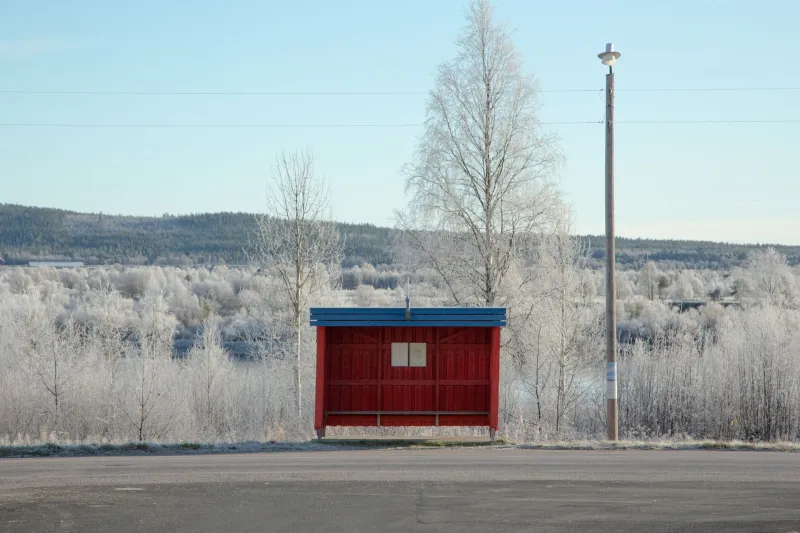
There is a particular kind of silence in a village bus shelter after the bus has gone. It is not peaceful. It is the sound of a plan folding itself up.
Last month I had a meeting in a market town about twenty minutes from home. Nothing dramatic: a catch-up with someone about a small website project, the sort of thing that should have been a coffee and a handshake. We finished at ten past six. The 18:10 bus was the one I had built my day around, and I had, in the final five minutes, decided to ask one more question. By the time I reached the stop, the single-decker was already pulling away. The next bus — the last bus — was at 18:50. Forty minutes in a shelter with one bench, a timetable in a plastic case and a poster for a car boot sale that had happened in August.
I stood there long enough to learn something I should have known already: deadlines are not just about the work. They are about the journey home.
The timetable is a client promise in disguise
When I work with people, I tend to talk about delivery dates as if they exist in a clean room. I will send the draft by Friday. I will have the edits done by Tuesday. What I often leave out is the messy bit around the edges: the school run, the phone call that runs long, the bus that only comes once an hour and will not be charmed by an apology.
That evening, the 18:10 was not a suggestion. It was a hard stop with a diesel engine. Miss it and the whole evening rearranges itself. Suddenly I was not just late home; I was late for the dog, late for dinner, late for the bit of work I had promised myself I would do after dinner. One small overrun had knocked over a row of dominoes I had not even noticed I had set up.
For independent workers, this is the quiet trap. We are often good at the first part of a promise — the part where we say yes — and less good at the second part, where we work out what that yes actually costs in time, travel and energy.
Schedule around the last bus, not the first
There is a useful mental shift in thinking about the last bus rather than the first. The first bus is about optimism. It says: if everything goes well, I can be there by nine. The last bus is about realism. It says: this is the point beyond which the day stops being mine.
I have started applying that to client work. Instead of asking, “How long will this piece take?” I try to ask, “What is the last sensible moment I can still be working on this before something else breaks?” That might be the last hour before the school pickup, the final twenty minutes before I need to leave for a meeting, or the point on a Friday afternoon when I know my concentration has already left the building.
It sounds pessimistic. It is not. It is just a more honest way of planning. If I know the last bus is at 18:50, I do not book a meeting that might run until 18:40 in a building fifteen minutes from the stop. If I know a client call usually overruns by ten minutes, I do not schedule it directly before a hard deadline. I leave a gap. The gap is not wasted time. The gap is the thing that stops the whole day from snapping.
The hidden cost of just one more thing
My mistake was not the question I asked at the end of the meeting. The question was probably useful. The mistake was pretending that the five minutes it took to ask it were free.
They were not. They cost forty minutes in a cold shelter, plus the low-grade guilt of letting someone down at home. And that is the bit we often miss when we are trying to be helpful, or thorough, or simply unwilling to leave a conversation unfinished. The last five minutes of any task are rarely just five minutes. They are five minutes plus the transition, plus the travel, plus the small reset your brain needs before it can do the next thing.
I have a friend who runs a small building firm. He told me once that he never quotes for a job without adding a day for “the thing that goes wrong.” Not because he expects disaster, but because something always takes longer than the plan. A delivery is late. A wall is not straight. A customer changes their mind. The extra day is not padding; it is the difference between a calm job and a rushed one.
Web work is not so different. A draft that needs one more revision. A client who replies at 5pm with three small thoughts. A plugin that decides today is the day it stops behaving. None of these are disasters, but they all eat into the space between “finished” and “out the door.”
A small rule with a hard edge
I have a new rule now, and it is deliberately unglamorous: I plan the end of the day from the last bus backwards. If I am travelling, the last bus is the anchor. If I am at home, the last bus is the school pickup or the point at which I need to stop before I become useless. Everything else fits around that.
It has changed the way I talk to clients. I am more likely to say, “I can have this with you by Thursday lunchtime,” rather than “Thursday.” I am more likely to leave a meeting when the meeting is done, rather than staying for the extra ten minutes that feel productive but are really just social momentum. And I am more likely to admit that a promise is not just a promise about the work. It is a promise about the rest of the day.
The bus shelter did not teach me anything new, really. It just made an old lesson uncomfortable enough to stick. Deadlines are not abstract. They have a last bus. And the last bus does not care how nearly you made it.
So now, when I am tempted to squeeze in one more thing, I picture that timetable in its plastic case. I picture the single-decker pulling away. And I ask myself whether the extra five minutes are worth forty minutes in the cold. Most of the time, they are not.