The Five-Minute Switch-On and the Eleven-Month Committee
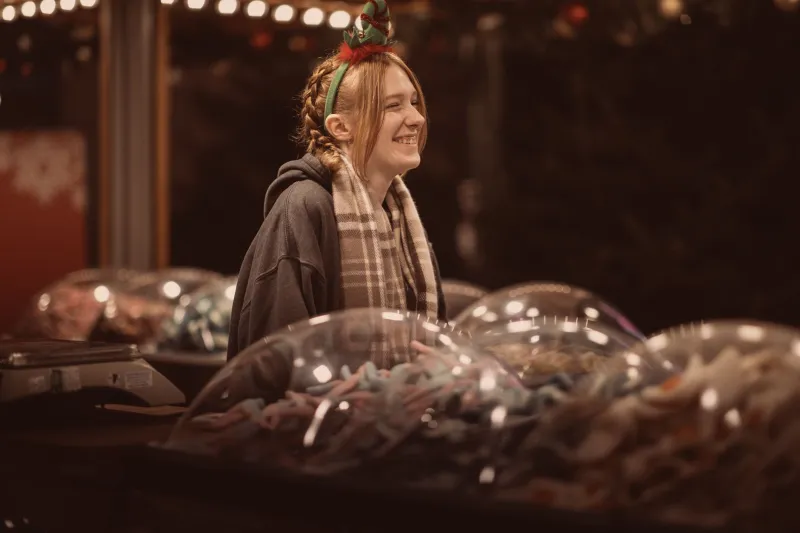
I joined the Christmas lights committee in September, which is either the best or worst time to volunteer. Best because the good bulbs have not yet been tested. Worst because everyone who has done it before looks at you with the gentle pity usually reserved for people who offer to help move a piano.
Our town is not big. The market square is modest, the lamp posts are old, and the main stretch of shops has a bakery, a charity shop and a hardware store that somehow stocks everything except the one thing you need. The Christmas lights are a proper local institution, though. People expect them. Children count down to the switch-on. Someone always says it gets better every year, even when it is exactly the same set of bulbs arranged in exactly the same way.
This year, 2026, I found myself on the committee. I had imagined meetings involving tea, a bit of grumbling, and perhaps a vote on whether the star should go on the left or the right. I was half right. There was tea. There was grumbling. But the star was the least of our problems.
The bit nobody claps for
The switch-on itself takes about five minutes. A local councillor says a few words, a child from the primary school presses a button, someone counts down, and the market square goes from damp November to something closer to a film set. People clap. The brass band plays. Then everyone goes to the Methodist hall for mince pies and mulled apple juice, and by half past six it is over.
The other eleven months are the committee. Not in a dramatic way. In a 'does anyone know where the extension lead went?' way. In a 'the insurance form needs a named responsible person and apparently that is me' way. In a 'the ladder is booked for Tuesday but the ladder owner has gone to Skegness' way.
That is the unglamorous core of community projects: the permissions, the paperwork, the physical stuff, and the rota. The switch-on is the photo. The committee is the album, the negative and the box of old prints nobody can quite throw away.
A spreadsheet called Do Not Lose
We have one shared spreadsheet. It is not fancy. It has five tabs: Bulb Inventory, Ladder Rota, Insurance, Switch-On Run Sheet, and one called Do Not Lose. That last tab contains the padlock code, the name of the man who owns the tall ladder, and the location of the fuse box in the village hall. If the spreadsheet were a person, it would be the calm one at the back of the room who actually knows what is happening.
The spreadsheet is the committee's memory. When someone asks whether we have enough bulbs for the corner by the chip shop, the answer is in there. When the council asks for a risk assessment, the answer is in there. When a volunteer asks what time they need to turn up, the answer is in there. It is not elegant. It is not a brand. It is a single place where the boring facts live.
That has been the most useful lesson for my own independent work. If a detail lives in three places, it lives nowhere. I have a folder on my laptop called 'Later', which is where good intentions go to become forgotten. The committee cannot afford a 'Later' folder. If the bulbs do not go up, the town notices.
Ladders, insurance and the price of a decent extension lead
Before anything gets switched on, there is a small mountain of practical admin. Public liability insurance. A risk assessment. PAT testing for the electrical gear. Permission from the council's highways team to use the lamp posts. A conversation with Bob, the retired electrician, who has a van, a head torch and a healthy suspicion of anything bought online for under a tenner.
The insurance form asks whether anyone will be using a ladder. The answer is yes, but not the same ladder, and not on the same day. One volunteer can do heights on Tuesday. Another can do Thursday morning but not after dark. A third is happy to hold the bottom of the ladder and offer commentary, which is its own kind of contribution.
We also discovered that the difference between a good switch-on and a stressful one is often a decent extension lead. Not a heroic, dramatic difference. Just a practical one. The right cable, the right fuse, the right person to check it. Nobody claps for the extension lead. Nobody should have to.
What it taught me about independent work
The committee has reinforced a few things I already suspected about side projects and freelance life.
First, the deadline is not the work. The switch-on is a deadline. The work is everything that makes the deadline possible. In independent work, it is easy to focus on the launch, the announcement, the visible moment. The useful effort is usually the quiet preparation: the checklist, the test, the backup plan, the conversation you have early rather than late.
Second, write down the boring bits. The padlock code. The fuse box. The name of the person who can lend a gazebo. The dull details are what keep a project moving when the enthusiastic people are tired or busy.
Third, ask for permission early. The council, the insurer, the ladder owner and the venue all have their own timetables. Assuming they will say yes is not a plan. It is a hope with a deadline attached.
Fourth, small and finished beats grand and half-up. We started with eleven bulbs in a box and a vague ambition. By December we had four hundred and six, a spare fuse, a labelled box for the fragile ones, and a spreadsheet that nobody is allowed to rename. It was not perfect. But it was up.
The switch-on is a deadline, not the work
On the night itself, I stood at the edge of the market square with a mug of mulled apple juice and watched the countdown. Five, four, three, two, one. The lights came on. A small child cheered. A dog barked. Someone near the back said they thought the star was slightly wonky, which it was.
It lasted five minutes. Then we packed away the table, coiled the extension lead, and made sure the padlock was on the village hall door. The committee will meet again in January. There will be tea. There will be a discussion about the wonky star. And somewhere in the shared spreadsheet, the first note for next year will be typed into a tab called Do Not Lose.
I will be back. Probably in September. Probably with a label maker.