Six Films, One Sheet of A4: Notes from a Pub Back-Room Cinema
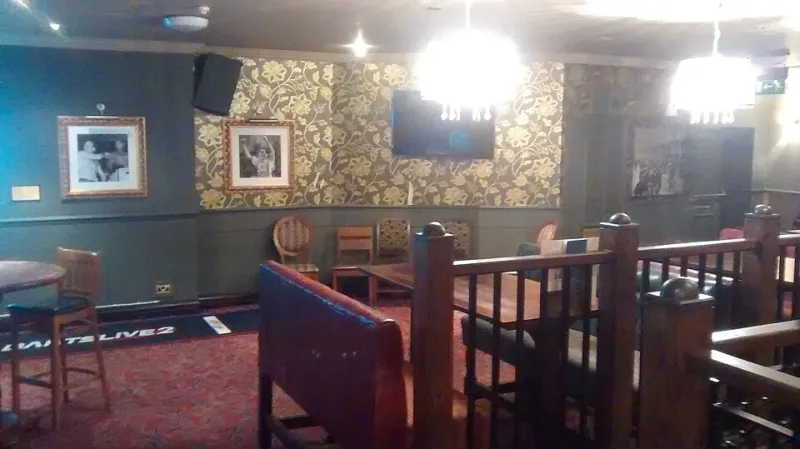
Photo: Fabian Tompsett (WMUK), CC BY-SA 4.0, via Wikimedia Commons
On the first Tuesday of the month, from October to March, the back room of a pub near me becomes a cinema. There are no velvet seats, no ticket app, no popcorn machine. There is a projector on a beer crate, a pull-down blind that stops six inches short of the window, and a stack of chairs the landlord lets us rearrange as long as we put them back. And there is a programme: one side of A4, handwritten, photocopied at the library that afternoon.
I started the club in 2024 because I wanted somewhere to watch films that weren’t new. Not obscure for the sake of it — just films that had slipped out of the feed. The rule from the beginning was six screenings a year. Six films. One page. No committee, no funding bid, no branded lanyards. Just a room, a projector, and whoever turns up.
Two years on, the club has taught me more about curation than any playlist, newsletter or algorithm I’ve ever tinkered with. It has also taught me when to leave a good thing alone.
The Six-Film Rule
Six is not a magic number. It is a constraint, and constraints are useful. When you can only pick six films, you stop picking films that are merely fine. You start asking what the season is for. Is it a thread? A mood? A running joke? One year I built the whole thing around films with scenes in kitchens. Another year it was films under ninety minutes, because the pub kitchen closes at nine and I wanted people to stay for a drink afterwards.
That kind of limitation does the editing for you. It forces a point of view. If I had twelve slots, I would fill them. If I had a whole streaming platform, I would fill that too. Six is enough to make a shape, and small enough that every choice has to earn its place.
Why One Page Is Enough
The programme has the same format every time: title, year, runtime, and a paragraph of no more than 150 words explaining why I chose it. At the bottom there is a line about the next screening and a reminder to bring a cushion if you want one. That is it. No QR code, no mailing list sign-up, no sponsor logo.
I write it by hand because a printed template makes the whole thing feel like a corporate away day. The handwriting is bad. People seem to like that. They pass the sheet around before the film starts, and someone always asks about the crossed-out title from the week before. That crossed-out title is usually a film I couldn’t get hold of, or one I watched again and decided was too long for a Tuesday. The programme keeps the mistakes in.
Curation Is Subtraction
The word curation gets used a lot now, usually to mean “we put some things in a list”. But the useful part of curation is what you leave out. I could program a season of crowd-pleasers in an afternoon. It would probably sell more seats. It would also be boring to put together, and the room would feel it.
The films that work best are the ones I can defend in a short paragraph without sounding like a film studies seminar. If I can’t explain why a film belongs in the room, it doesn’t go on the page. That test is ruthless in a useful way. It keeps the season personal without making it precious.
The Campaign I Didn’t Run
I have a website. I like a side project. I have, on occasion, made a spreadsheet for something that did not need a spreadsheet. So the temptation to turn the film club into content was real. I could have filmed a short intro for each screening. I could have made a reel of the best bits, started a newsletter, built a little members’ area with a password and a PDF.
I didn’t. Partly because I couldn’t be bothered, and partly because the programme is the artefact. It does the job. It tells people what is on, why it is on, and when to turn up. If someone photographs it and puts it on their own feed, fine. But I am not going to spend the week before a screening making vertical video about a film that is already thirty years old. The night is the point, not the campaign around it.
What Algorithms Can’t Photocopy
A recommendation engine can tell you what people like you watched next. It cannot stand in a back room and explain why a black-and-white film from the 1940s is worth ninety minutes of your Tuesday. It cannot notice that the landlord has left the heating on too high and open the fire door. It cannot cross out a title because the DVD skipped.
The handwritten programme has my handwriting on it. It has the date of the next one, written slightly too small in the bottom corner. It has a spelling mistake I only noticed after I’d photocopied thirty copies. That is not a brand strategy. It is just a person making a small thing for other people. Oddly, that is the part people respond to.
The Small Audience Is the Point
Some nights there are fifteen of us. Some nights there are four. The four-person nights are not failures. They are rooms. The film still goes on, the programme still gets handed out, and the conversation afterwards is usually better because there are fewer people talking over each other.
I used to think a side project needed growth to be legitimate. Now I think it needs a shape. Six films, one page, a back room, a pub that lets us use the chairs. That is enough. The next season’s programme is half-written, with two titles confirmed and one I’m still trying to track down on DVD. If it doesn’t arrive in time, I’ll cross it out and write something else. The page will still work.