The Library Card Is a Productivity Tool: Working from Britain’s Public Libraries
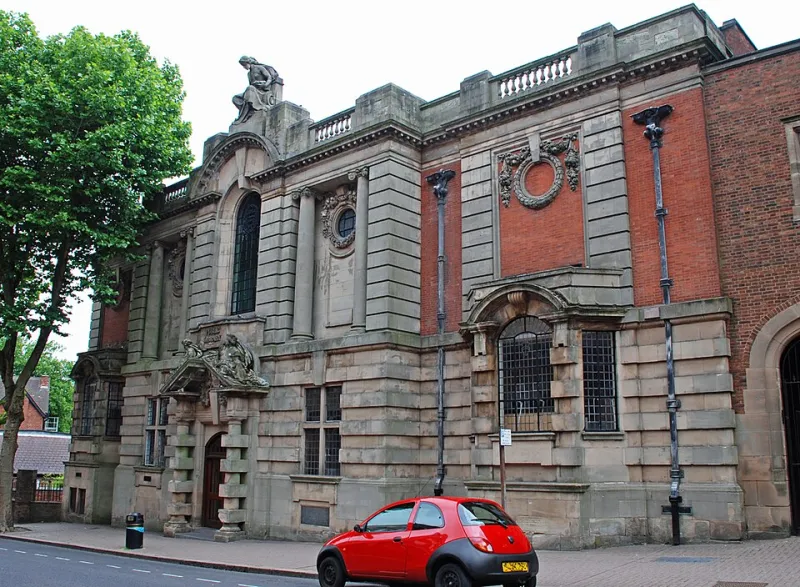
Photo: Brian Clift, CC BY-SA 2.0, via Wikimedia Commons
There is a moment, about forty minutes into working from a café, when the maths stops working. You have finished your flat white, the table is too small, someone is loudly explaining a spreadsheet, and you feel obliged to buy another drink just to keep your seat. In 2026, that is an expensive way to get very little done.
My local library, by contrast, costs nothing. It has a desk, a plug socket if you are lucky, and a silence so deep you can hear your own laptop fan. It is not perfect. It is not a WeWork. But for independent projects, it might be the best free co-working space in Britain.
Why the library beats the café
Cafés are built for turnover. Libraries are built for lingering. That is the whole point. Nobody is going to hover by your table hoping you finish your cappuccino so they can sit down. Nobody is going to ask you to move because the lunch rush is starting.
The financial side matters too. A day in a café can easily cost eight or ten pounds in drinks and snacks, which adds up if you are trying to keep a side project lean. A library card is free, and so is the wifi in most branches. You can bring your own flask and a sandwich, find a corner, and get three solid hours of work done without watching the clock.
There is also a psychological benefit. A café is a social space, even when you are alone. A library is a working space. The atmosphere does half the discipline for you.
The practical basics: card, wifi and desks
First, get a library card. Most UK councils let you join online or in person, and you will usually need proof of address. It takes ten minutes and unlocks more than books: wifi, computers, printing, and in some branches, meeting rooms and local archives.
Wifi varies. Some libraries use your card number to log in. Others have a guest network. A few still have slightly ancient systems that require a staff member to help. Check the council website before you go, or just ask at the desk. Staff are used to people turning up with laptops and looking slightly lost.
Desks are a mixed bag. Larger central libraries often have proper study areas with power sockets. Smaller branches might have a few tables near the shelves and not much else. Bring a charged laptop and a battery pack if you can. Do not assume every desk has a plug, and do not unplug the library’s own equipment to make room for yours.
Etiquette that keeps you welcome
Libraries are one of the last indoor places where you can exist without being expected to buy something. That makes them precious, and it means the etiquette matters.
Know which zone you are in. Many libraries have a social area near the entrance, a quieter section in the middle, and a silent reference or study area at the back. Do not take a Teams call in the silent zone. Do not take a Teams call in the quiet zone either. Step outside or book a room.
Use headphones. Keep phone notifications off. Do not spread your belongings across four chairs. If you are there for the day, take a proper break and let someone else use the desk. And if you are unsure about food or drink, ask. Rules differ between councils, and the staff would rather answer a quick question than clean up a lunch you were not meant to eat.
Booking a room, and when not to
Many UK libraries have meeting rooms or study rooms that can be booked by the hour. Some are free for community use, some charge a small fee, and some are reserved for library events. Ask at the desk or check the council website. You will often need your library card number, and popular slots go quickly.
A room is worth it if you are recording a podcast, taking a string of calls, or meeting a collaborator. It is not worth it if you just want a quiet desk. Use the reading room for that. The whole point of a library is that you can be alone in public without taking up a room.
The silent reference section is the killer feature
The reference section is the unsung hero of the British library. It is usually the quietest part of the building, often has the best desks, and is frequented by people who are genuinely there to concentrate. No one is going to ask if you are still working on that thing. No one is going to play tinny music from their phone. The only sounds are page turns, keyboard taps and the occasional cough.
It is also a good place to do research. You might find local archives, old maps, trade directories or books that are not online. For a side project, that can be a lovely change from another browser tab. A library is not just a desk with a roof; it is a small civic research department.
A field guide for a Tuesday
Pack light: laptop, charger, headphones, water, notebook, library card. Arrive early enough to scope out the desks. Sit away from the door and the printer. Check the closing time before you get stuck into something. And leave a little time at the end to browse the shelves. You are already there.
The catch is that not every library is a perfect workspace. Opening hours have been cut in many areas, wifi can be patchy, and some branches are quieter than others for reasons that have nothing to do with work. But when it works, it really works.
For the price of a library card, you get a desk, a bit of peace and a reminder that not every productive space needs a loyalty scheme. That is a bargain worth protecting.