Pinned, Torn, Trusted: The Noticeboard Still Beats the Local Feed
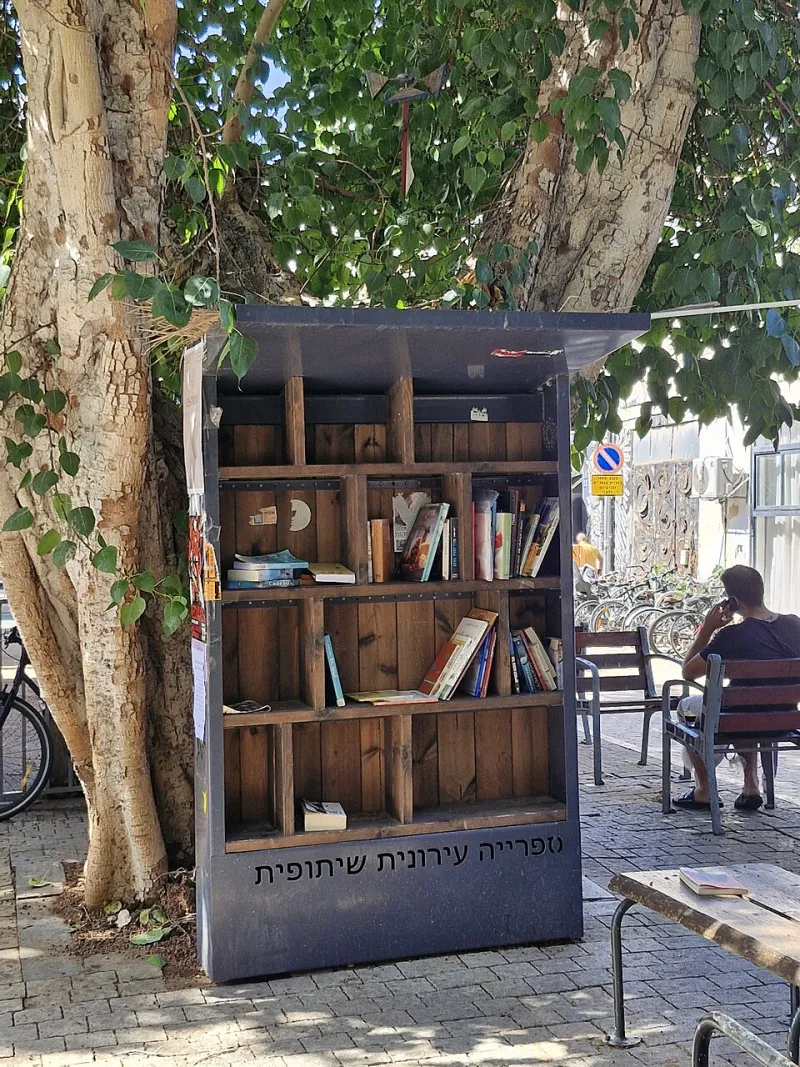
Photo: LeRenartQuiPense, CC BY 4.0, via Wikimedia Commons
On a grey Tuesday in November I found myself standing in front of a library noticeboard, reading a laminated advert for a French conversation group, a handwritten plea for a reliable dog walker and a parish council notice about a bench. I had gone in to return a book. I came out with a small theory about local media.
The theory is this: the noticeboard is not a quaint leftover. It is the original hyperlocal feed, and it still works because it does fewer things than the internet does. It has no engagement metrics, no replies, no algorithm and no notifications. It just sits there, quietly sorting the useful from the ignored. For anyone running an independent project, that is worth studying.
The library board is a slow search engine
My local library board is curated by staff. That matters. Someone has decided which flyers go up, which ones are too tatty, which ones are commercial and which ones are community. The result is a low-volume, high-trust surface. You do not scroll it; you browse it while waiting for the printer or the loo.
The best flyers on that board share a grammar. One event, one audience, one action. A tear-off strip with a phone number. A date in large type. No QR code pointing to a twelve-page website. The library board is a reminder that reach is not the same as attention. A board seen by two hundred people a week can outperform a post seen by two thousand people for half a second.
In the laundrette, you get a captive audience
The laundrette corkboard is a different beast. It is messy, overlapping, occasionally damp. There are cards for mobile mechanics, guitar lessons, rooms to let, someone who will fix a zipper. People stand in front of it for forty minutes because their washing is going round. That is dwell time you cannot buy.
The lesson for small projects is not ‘print more flyers’. It is ‘find the place where your people are already waiting’. A newsletter read in a quiet ten minutes. A listing page checked on a Sunday evening. A café queue. The noticeboard does not chase anyone. It is placed where attention already exists.
The village hall board is an institutional handshake
The village hall board is the most formal of the lot. Parish council meetings, the WI, a table-top sale, a yoga class, a reminder about the defibrillator. The pinboard is a shared asset with rules. You ask permission. You use a drawing pin, not tape. You take your flyer down after the event.
That formality is not friction. It is trust by association. If the hall lets you pin something, you are briefly part of the local infrastructure. Small publishers can borrow the same logic. A guest post in a trusted newsletter, a listing in a respected directory, a recommendation from a local shop — these are village hall pins. They are slower than a paid ad and worth more than the impression count suggests.
Café windows are the curated mess
The independent café window is where the noticeboard becomes a collage. Blue Tack, Sellotape, a faded poster for a comedy night that happened in September. The café owner is the editor. They choose what stays. A good café window has a personality: a bit scruffy, a bit local, occasionally odd.
Your homepage is a café window. It is not a feed. It is a small, curated surface that tells a passer-by what kind of place this is. The mistake is treating it like a noticeboard with infinite space. The café window works because it is limited. You cannot pin everything. You have to choose.
What the local internet still gets wrong
I am not arguing that Facebook groups and Nextdoor are useless. They have reach, speed and search. But they also have noise, moderation problems and a strange ability to turn a request for a plumber into a forty-comment argument about parking. The noticeboard has no comment section. That is a feature.
A pinned flyer is accountable in a way a post is not. It has a name, a phone number and a physical location. If the dog walker is unreliable, people find out. If the event is cancelled, the flyer comes down. The local feed can do all of this, but it rarely does it as cleanly. The noticeboard’s limits are the point: it cannot scale, so it stays local.
What I would steal for a small project
- One flyer, one action. If your project needs a paragraph to explain itself, the flyer is not ready.
- Tear-off tabs are conversion. A low-commitment next step beats a grand call to action.
- Placement beats promotion. Find the place where your audience is already paused.
- Let someone else curate. A trusted editor is worth more than another social post.
- Measure ‘pinned’, not ‘liked’. Did someone keep it? Did they ring the number? Did they turn up?
The noticeboard is not a replacement for the internet. It is a corrective. It reminds me that local media works best when it is specific, limited and accountable. A curled A5 flyer with a tear-off phone number is not nostalgia. It is a small, functioning piece of infrastructure — and most of us could learn something from the way it hangs there, waiting to be useful.