The Small, Strange Podcasts That Taught Me What an Audience Actually Is
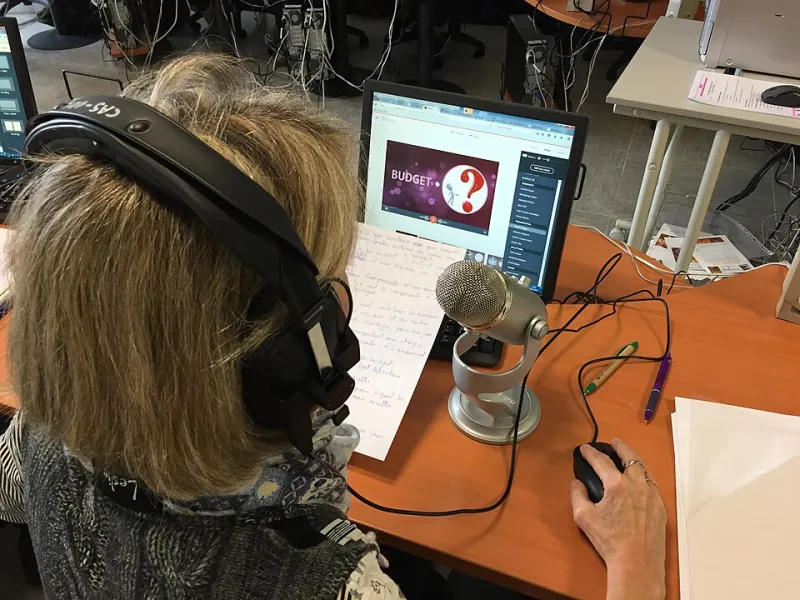
Photo: Guillaume Bonzoms, CC0, via Wikimedia Commons
I don’t listen to podcasts to ‘optimise my content strategy’. I listen because I like being in a room with someone thinking out loud. But every so often a show changes the shape of a question I’ve been carrying around. This year, that question has been: what is an audience, really?
For a UK freelancer with a personal site, ‘audience’ can become a strange little word. It sounds like a crowd. It sounds like numbers. It sounds like something you build by posting more. The six podcasts below are all independent, all British in their own way, and all quietly suspicious of that version of the word. They’re not all about freelancing. That’s the point.
1. Being Freelance — Steve Folland
This is probably the closest thing to a set text for UK freelancers, but it still feels like a conversation rather than a course. Steve Folland talks to people who work for themselves about the practical stuff: money, boundaries, dry spells, the jobs that didn’t work out.
What it reframed for me: audience as a room, not a stage. The show works because it’s specific. You don’t need a million listeners. You need the right person nodding along on a dog walk in Leeds. For my own site, it made me ask whether I was writing to impress a crowd or to be useful to a handful of people I could actually picture.
2. Creative Boom Podcast — Katy Cowan
Creative Boom has been part of the UK creative scene for years, and the podcast has that same editor’s eye. It’s interviews with designers, illustrators, photographers and makers about the work behind the work — how they got started, what they charge, how they keep going.
The audience reframe: curation is a form of generosity. Katy asks the questions a reader would want asked, which is different from asking the questions that make the guest look clever. That’s a useful test for my own posts. Am I writing the thing that sounds impressive, or the thing that helps someone on a Tuesday afternoon?
3. The Hopeful Creative — Jen Carrington
This one is gentler. Jen Carrington talks about creative business in a way that doesn’t pretend everything is a growth curve. There’s room for rest, for changing your mind, and for building something that fits your actual life rather than your imagined future one.
The audience reframe: permission is a product. A lot of independent work isn’t sold by shouting. It’s sold by making someone feel less alone in a decision they were already circling. I’ve started treating some of my site updates less like announcements and more like notes left on the table for whoever needs them.
4. Design Life — Charli Prangley and Femke van Schoonhoven
A design podcast that feels like two friends comparing notes after work. Charli and Femke talk about careers, side projects, burnout, and the gap between the polished work you see online and the messy process behind it.
The audience reframe: audience as peers, not fans. They don’t perform expertise; they share working thoughts. That’s closer to how I want russellfutcher.com to feel. Less ‘here is my finished opinion’, more ‘here is what I’m noticing, and here’s what I’m doing about it’.
5. The Modern House Podcast — The Modern House
A UK design and architecture podcast that is really about how people live. The conversations wander into taste, compromise, money and the stories we tell ourselves about home. It’s beautifully produced, but it never feels like a brand shouting.
The audience reframe: a point of view is more welcoming than a niche. I used to think my site needed to be tightly ‘about’ one thing. This show proves you can be curious and still recognisable. The through-line is taste and attention, not a keyword.
6. The White Pube Podcast — Gabrielle de la Puente and Zarina Muhammad
The White Pube are art critics who write and talk with real wit and refusal. Their podcast is opinionated, loose and often very funny. It’s not a freelancing show, and that’s exactly why it’s on the list.
The audience reframe: an audience can be a group of people who trust your judgement, even when they disagree. That’s different from an audience that just consumes. It made me less afraid of having a view on my own site. Neutral doesn’t have to mean bland. It can mean fair, clear and willing to say what I actually think.
What these shows have in common
None of them are trying to be everywhere. They’re all small enough to have a voice. They treat the listener as a person who has chosen to spend time with them, not as a metric to be captured. And they all sound like they’d rather have one good reply than a thousand passive likes.
That’s the version of audience I want for my site in 2026. Not a funnel. Not a ‘personal brand’. A small room with the door open.
The one episode that changed how I approach my own site
The episode that actually shifted something for me was a Being Freelance conversation with a copywriter who described her newsletter as ‘a small room, not a stage’. I wrote it down and stuck it above my desk. It sounds twee. It isn’t. It changes what you publish.
When you’re on a stage, you project. You round the edges. You wait for applause. When you’re in a small room, you can be specific, useful and a bit unfinished. You can say ‘I got this wrong’ without turning it into a lesson. You can share a project before it’s polished.
For a UK independent site, that’s the only sustainable version of audience-building I’ve found. The big numbers are mostly weather. The small room is the work.