The Clerk’s Rule: Say What Happened, Say What Happens Next
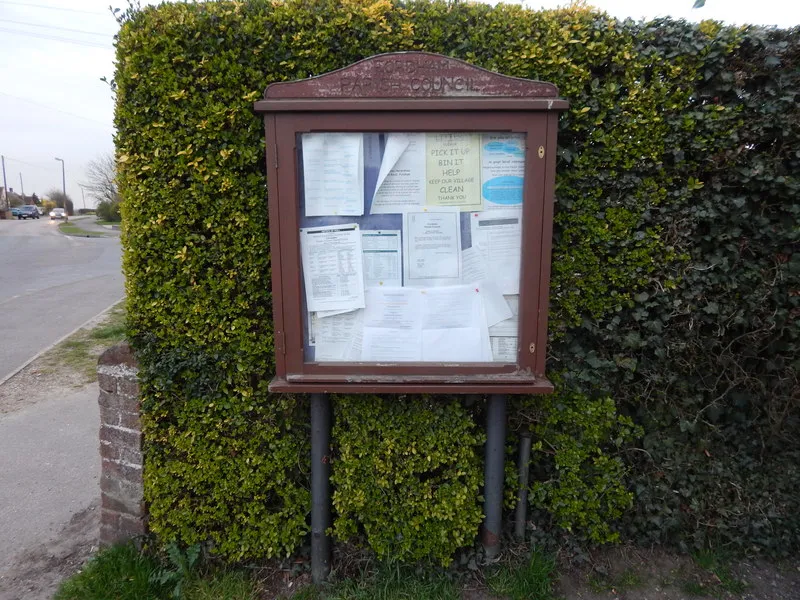
Photo: Hamish Griffin , CC BY-SA 2.0, via Wikimedia Commons
I went looking for a parish council minutes page because of a gate. Not a grand gate, just the sort that sticks in November and makes you late for the village hall. The council had discussed it, apparently, and I wanted to know whether anyone had actually agreed to do anything. What I found was not thrilling reading. It was, however, unusually clear. Item 7: the gate would be repaired. The clerk would ask the county council. The work would be done before the end of the month. The cost would come out of the grounds maintenance budget. I closed the tab knowing exactly what had happened, what was coming next and who was paying for it.
That is a low bar, and yet a lot of websites cannot clear it. Including mine, on a bad week.
The bit that made the minutes work
Parish council minutes are not famous for being page-turners. They are written by people with a duty to record decisions, not to entertain. But the good ones have a structure that any independent project could borrow. They name the thing. They record the decision. They say who is doing the next bit. They put a date on it. They mention the money, even when the money is boring.
The padding is usually where it goes wrong. You can spot it a mile off: “Members resolved to note the update and instructed the clerk to pursue the matter in accordance with the agreed procedure.” Fine, but what does that mean for the gate? Will it open on Saturday or not?
Plain English is not about dumbing anything down. It is about respecting the reader’s time. The clerk does not know whether I am a retired joiner, a parent with a pushchair or a bloke trying to get to a meeting. So the minutes assume nothing. They spell it out.
Nobody is paid to read your news
That is the sentence I keep coming back to. Nobody is paid to read my project updates. Nobody is paid to read yours. They might be curious, kind or stuck at a bus stop, but they are not on the clock. If a paragraph makes them work too hard, they will go and look at something else.
So I have started applying the clerk’s rule to my own bits and pieces. It goes like this: say what happened, say what happens next, say what it cost, and say who to ask. That is it. Four questions, answered in the order a normal person would ask them.
For a side project, that might read:
- I rebuilt the archive page because the old one loaded slowly on mobile.
- The first version is live now; the search box comes next month.
- It cost me two evenings and £18 for a font licence.
- If something looks broken, email me and I will fix it.
No “exciting journey”. No “phase two of the digital transformation”. Just the gate, the clerk and the budget line.
The contact page test
I have rewritten my contact page more times than I care to admit. The old version had a form and a vague promise to “be in touch shortly”. That is the website equivalent of “members resolved to note”. It tells the reader nothing useful.
The parish council version is better. It says when the next meeting is, where the papers are published, how to ask for something in writing, and how long a reply usually takes. It is not glamorous, but it is honest. A contact page should do the same job: tell me what happens after I press send, roughly when, and what I should do if I never hear back. That is not admin. That is courtesy.
Padding is usually hiding something
Sometimes bureaucratic language is just habit. Sometimes it is a way of not committing to a date. “Work is ongoing” can mean “we have not started”. “Discussions are at an advanced stage” can mean “nobody has replied to the email”. I have written both, and I did not feel good about it either time.
The minutes I read were not perfect. There were references to committees I did not understand and a couple of acronyms that needed a glossary. But the core was solid. The clerk had taken a messy conversation and turned it into a record that a stranger could follow. That is a skill worth pinching.
A small checklist for clearer updates
Before I publish a project note now, I run it through the parish council test.
- Can someone who was not in my head understand the decision?
- Is there a date, even a rough one, for the next step?
- Have I said what it cost, in money or time, if that matters?
- Is there a named person or a clear route for questions?
- Have I cut every sentence that only exists to sound professional?
It is not a cure for bad writing. It is a way of catching the worst of it before it goes live.
The gate, for what it is worth, was fixed. The minutes said it would be, and then the minutes said it had been. I like that. A record that makes a small promise and then closes the loop. My website could do worse than take notes from a parish clerk.